
Shri Dwarkadhish Gopal Mandir
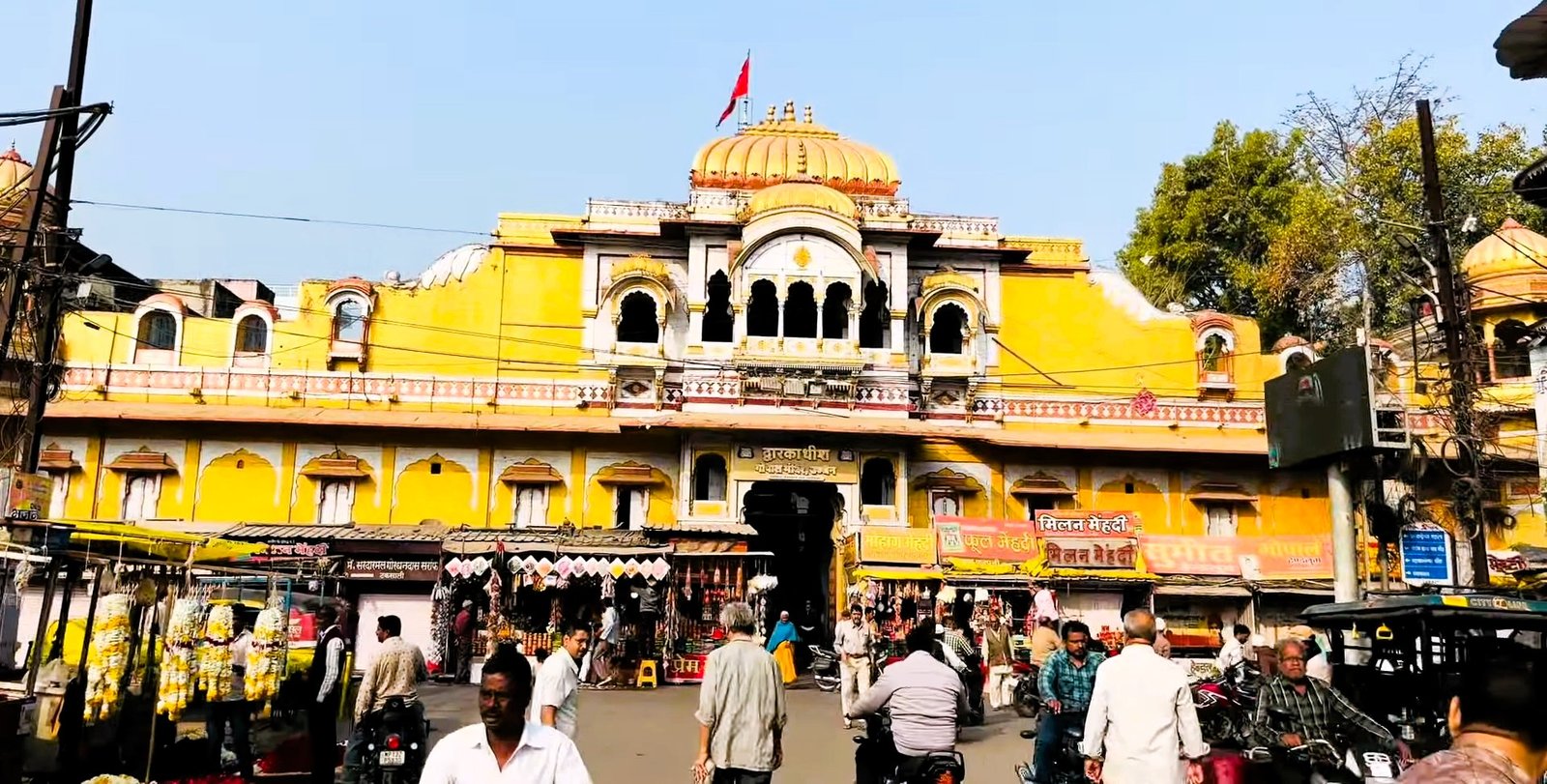
Table of Contents
In 1026 AD, Mahmud of Ghazni looted a set of silver doors from the Somnath Temple in Gujarat and carried them off to Afghanistan. Those same doors later travelled to Lahore, and after nearly 800 years, they found their way back to India — into a Krishna temple standing in the middle of Ujjain’s busiest market.
That temple is Gopal Mandir, Ujjain’s second-largest temple after Mahakaleshwar, and a site well worth including in any Ujjain Tour Package. Here is what you need to know before you visit.
Quick Facts at a Glance
What | Details |
Dedicated To | Lord Krishna, worshipped as Dwarkadhish (King of Dwarka) |
Also Known As | Gopal Mandir, Dwarkadhish Temple |
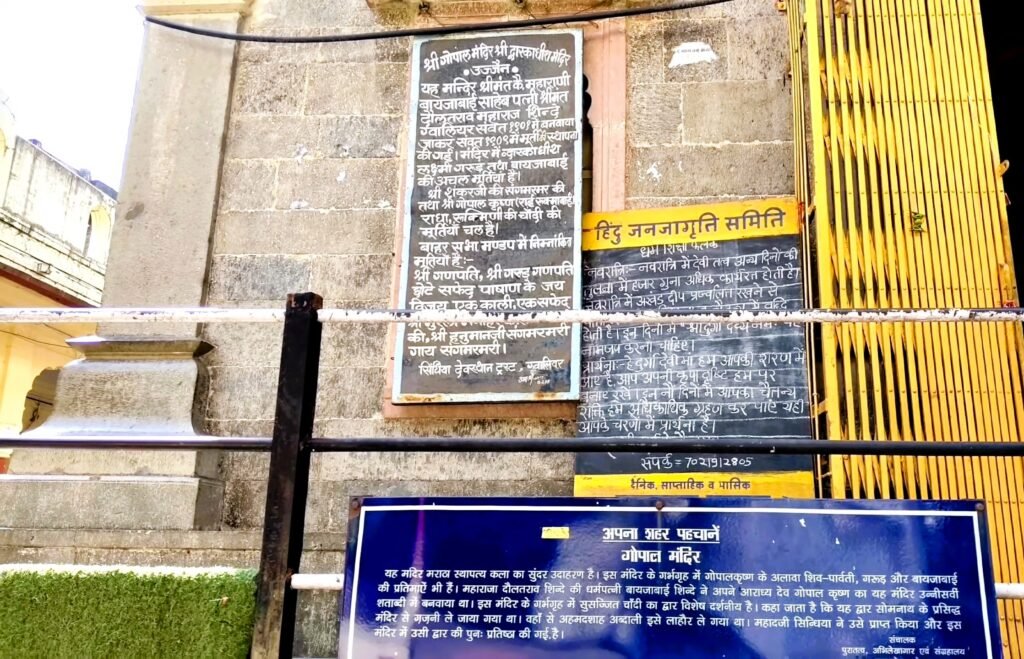
Built By | Bayaza Bai Scindia (Baiza Bai), wife of Maratha ruler Daulat Rao Scindia |
Construction Period | 1844 (most-cited date); some sources place it between 1844 and 1856 |
Architecture Style | Maratha, with white marble sanctum and black stone hall |
Rank in Ujjain | Second-largest temple after Mahakaleshwar |
Entry Fee | Free |
Famous For | Silver idol of Krishna and silver doors recovered from Somnath Temple |
What Is Gopal Mandir?
Gopal Mandir stands in the heart of Ujjain’s main market, so it’s part of daily city life as much as it is a place of worship. The temple is dedicated to Lord Krishna in his royal form as Dwarkadhish, meaning “King of Dwarka.”
The sanctum and spire are made of white marble, while the hall around it is built in black stone — a style typical of Maratha temples from this period.
History — Who Built It, and When?
Gopal Mandir was built by Bayaza Bai Scindia, the widow of Maratha ruler Daulat Rao Scindia. The land originally belonged to the Scindia royal family before it was turned into a temple.
Detail | Information |
Built By | Bayaza Bai Scindia (also written as Baiza Bai or Bayajibai) |
Most-Cited Year | 1844 |
Idol Installation | Around 1852, according to some records |
Original Use | Scindia royal property, later turned into a temple |
Estimated Age Today | About 180-200 years |
Note: The queen’s name is spelt differently across records, and the exact year varies slightly between sources. This is common for 19th-century temples and doesn’t change the temple’s history.
The Somnath Door Story
The silver doors behind Krishna’s idol have their own history. They are believed to be the same doors once taken from the Somnath Temple in Gujarat.
- 1026 AD — Mahmud of Ghazni takes the doors from the Somnath Temple to Afghanistan.
- Later — Afghan ruler Mohammad Shah Abdali moves the doors to Lahore.
- 19th century — Maratha general Mahadji Scindia brings the doors back to India.
- Today — the doors are fitted in Gopal Mandir, where they still stand.
Why it matters: the exact dates of recovery aren’t fully documented, but the doors remain a rare, physical link to a nearly 1,000-year-old event in Indian history.
Inside the Temple
- A 2-foot silver idol of Lord Krishna, set on a marble altar.
- Idols of Lord Shiva, Parvati, and Garuda in the same complex.
- The recovered Somnath doors, placed right behind the main idol.
- A large courtyard, once used by pilgrims resting during the Simhastha (Kumbh Mela).
Festivals and Rituals
Festival | What Happens |
Janmashtami | Grand celebration of Krishna’s birth with decorations, bhajans, and sweets |
Harihar Milan (Harihar Parva) | A midnight procession brings Mahakaleshwar’s symbolic presence to meet Lord Krishna, marking the union of Shiva and Vishnu; worship continues for about two and a half hours |
Daily Aarti | Held in the early morning and evening |
- Common offerings include milk, butter, sooji halwa, and panchamrit.
Practical Visitor Information
Detail | Information |
Location | Main market square (Bada Bazaar / Dabri Pech area), Ujjain, Madhya Pradesh |
Temple Timings | 5:00 AM to 7:00 PM |
Entry Fee | Free |
Photography | Not allowed inside the sanctum at most times |
Distance from Ujjain Junction | About 2 to 2.5 km |
Nearest Airport | Devi Ahilyabai Holkar Airport, Indore — about 60-65 km |
Visit Duration | About 45 minutes to 1 hour |
Tip: Since the temple sits in the city’s main market, it’s easy to combine your visit with shopping or a food stop at Sarafa Bazaar.
Nearby Places to Visit
Being right in the heart of Ujjain’s market district, Gopal Mandir is easy to combine with several of the city’s other major sites —
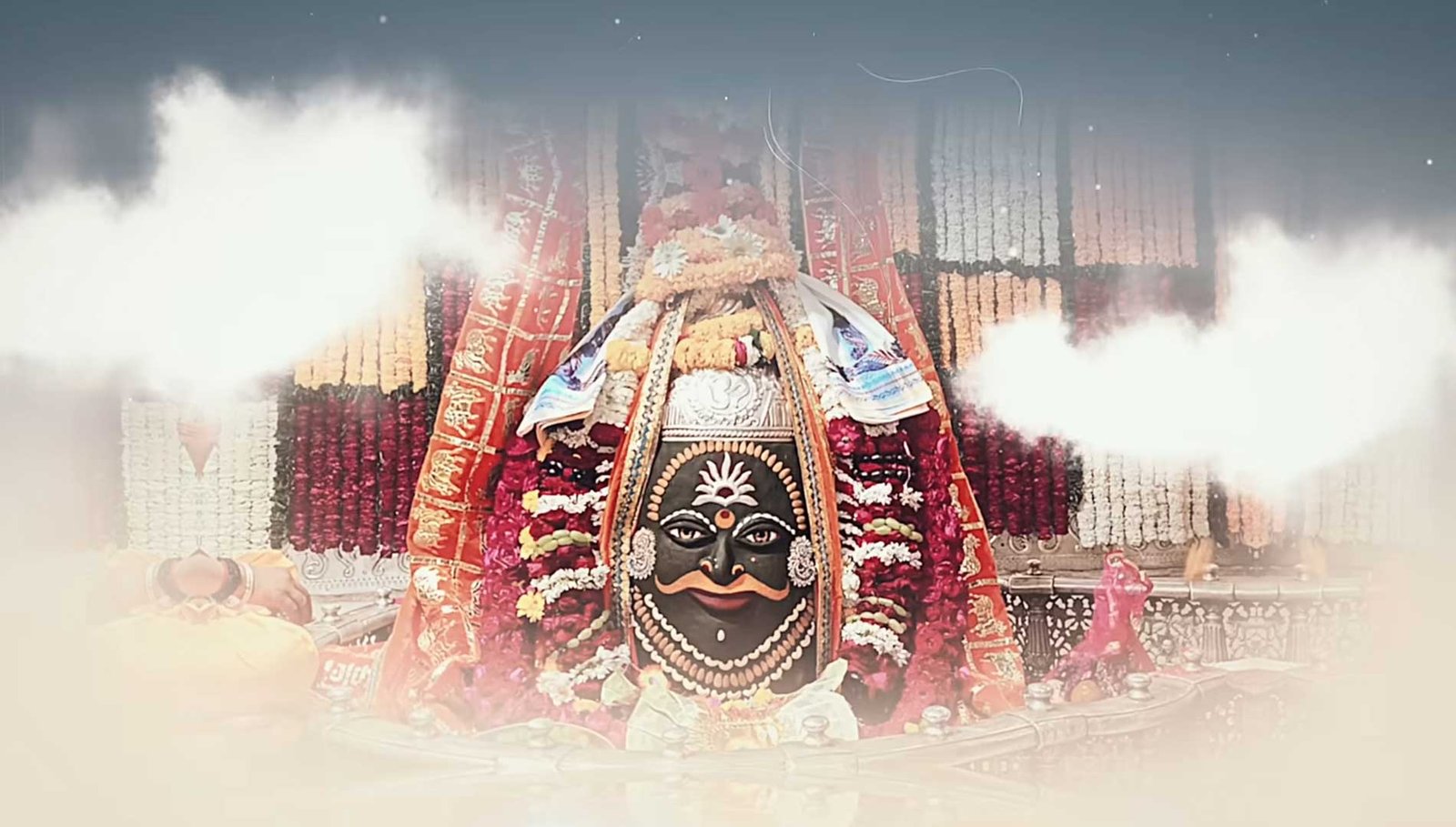
Mahakaleshwar Jyotirlinga – Ujjain’s most prominent temple and one of the 12 Jyotirlingas in India, a short ride away and famous for its Bhasma Aarti.
Harsiddhi Temple – One of the 51 Shaktipeethas in India, known for its twin lamp towers lit with 726 oil lamps each evening.
Ram Ghat – A peaceful riverside spot on the Kshipra River, known for its evening aarti and role during the Simhastha Kumbh Mela.
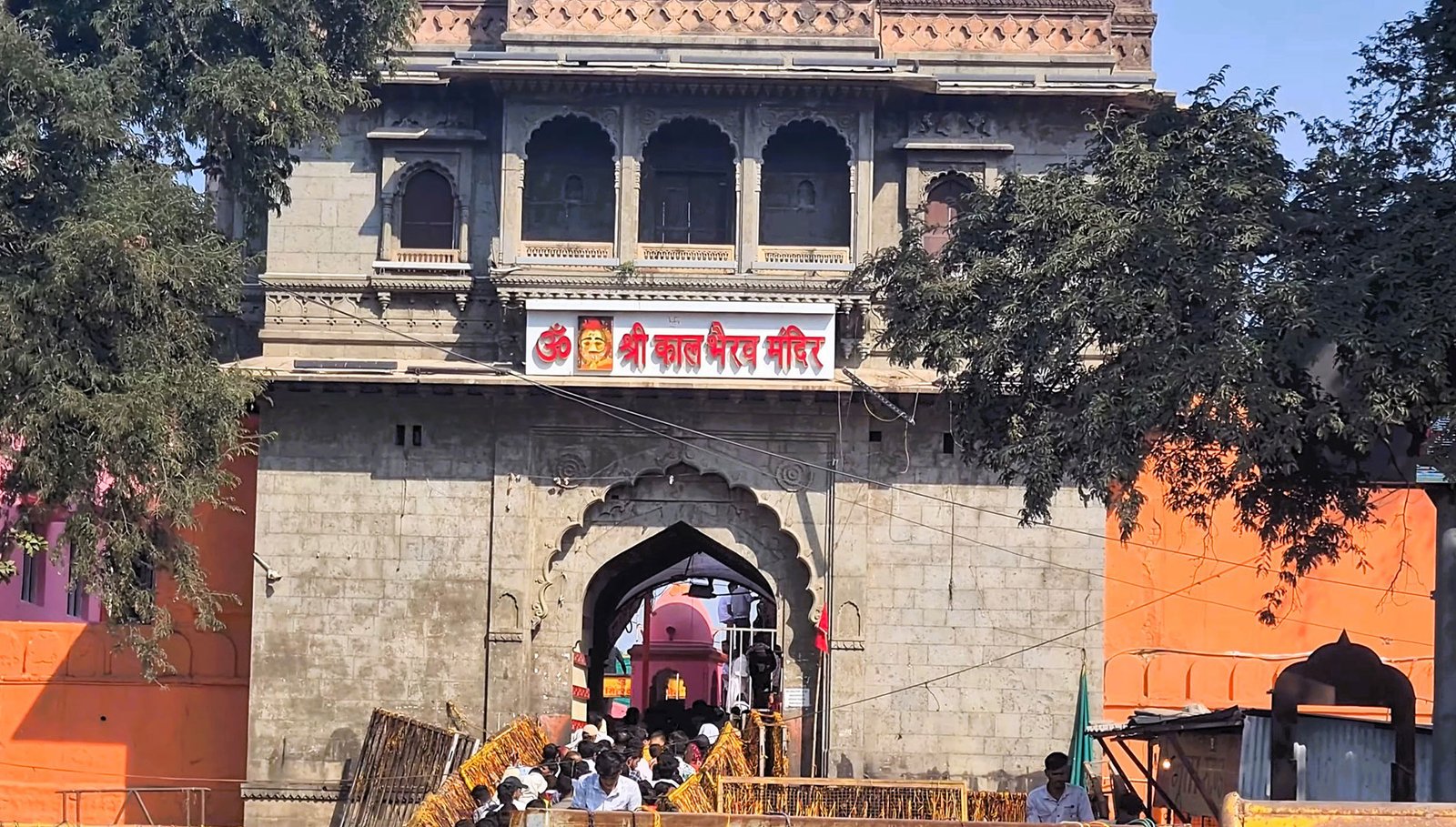
Kal Bhairav Temple – Known for its unique tradition of offering liquor as prasad to Lord Bhairav.
These sites, along with Gopal Mandir, are commonly included together in comprehensive Madhya Pradesh Tour Packages, letting travellers cover Ujjain’s temple circuit and market culture in one smooth, well-organised trip.
Conclusion
Gopal Mandir is more than just Ujjain’s second-largest temple. It’s a place where a 19th-century queen’s devotion and a centuries-old door from Somnath sit in the same room. If you’re visiting Ujjain’s other temples, this one is an easy and worthwhile stop.
Frequently Asked Questions
Who built Gopal Mandir?
Bayaza Bai Scindia, in 1844.
Why is it also called Dwarkadhish Temple?
Because Krishna is worshipped here as Dwarkadhish, “King of Dwarka.”
Is there an entry fee?
No, entry is free.
What's special about the temple doors?
They are believed to be the same silver doors once taken from the Somnath Temple, later recovered and placed here.
How far is it from Mahakaleshwar Temple?
Just a short distance within the city — easy to visit both in one trip.
What is the best time to visit?
Janmashtami and Harihar Parva are the most festive, but the temple is open daily, 5 AM to 7 PM.
Get Call back From travel expert
Related Posts
Most Popular Ujjain Tour Package
Ujjain Itinerary for 2 Days
- 1 Night 2 Days
Form
INR 4200 Per Person INR 6972
Ujjain Itinerary for 2 Nights 3 Days
- 2 Night 3 Days
Form
INR 6747 Per Person INR 9747
Ujjain Itinerary for 3 Nights 4 Days
- 3 Night 4 Days
Form