
Triveni Museum
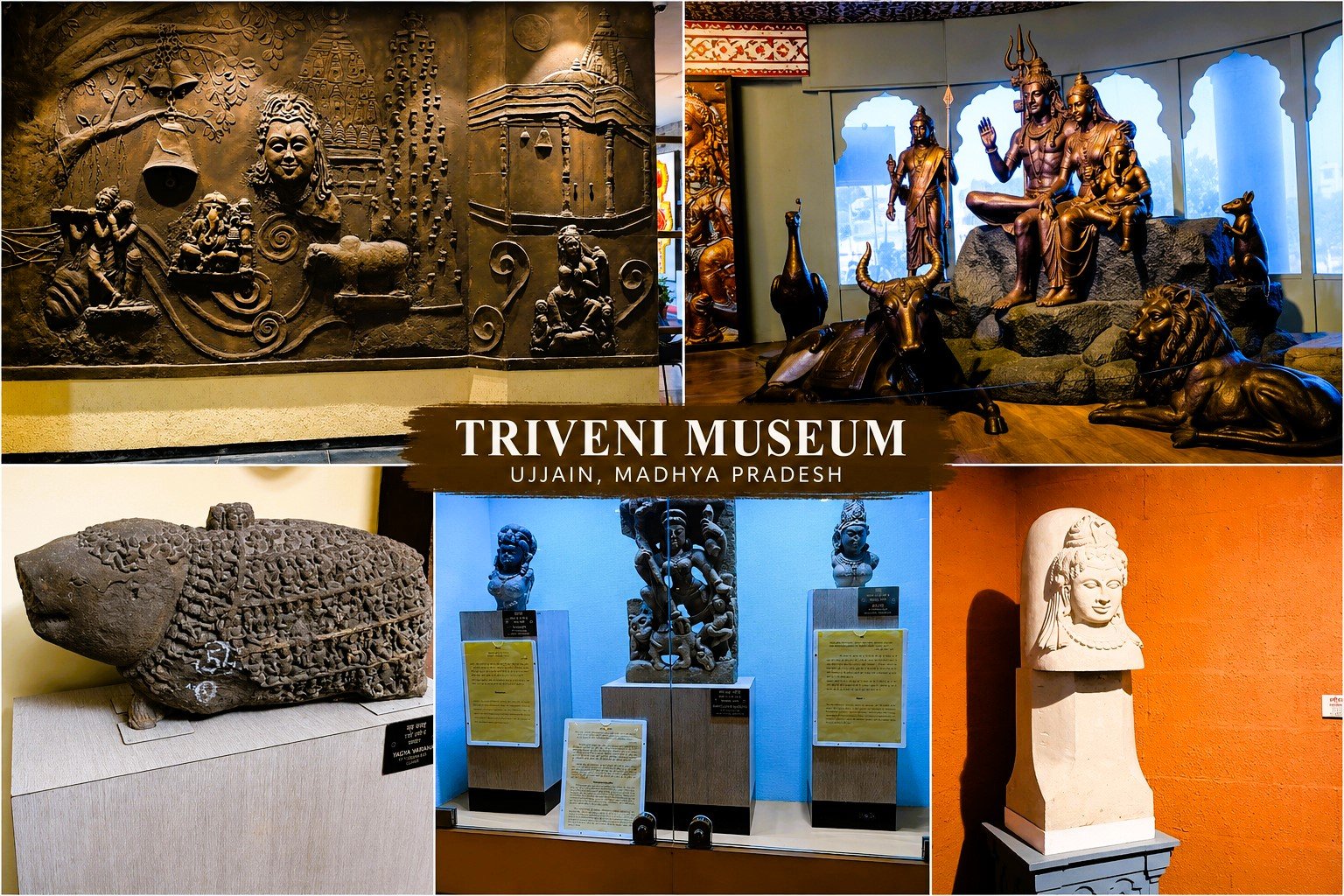
Table of Contents
Triveni Museum Ujjain: My Visit and Why It’s Worth Adding to Your Trip
I’ll admit, Triveni Museum wasn’t even on my original list when I planned my Ujjain trip. I only went because my hotel guide mentioned it was close to Ram Ghat and wouldn’t take much time. Turns out, it ended up being one of the more interesting stops of my entire Ujjain trip, and I think a lot of tourists skip it without realising what they’re missing.
Here’s everything I noticed during my visit, along with some practical details that’ll help if you’re planning to go.
Why Called Triveni?
The name “Triveni” itself comes from the idea of a confluence of three traditions. The museum is divided into three galleries, called Shaiv, Vaishnava and Shakt, each representing a different stream of Hindu worship — Shiva, Krishna, and the goddess traditions. I didn’t know this walking in, but it made the layout make a lot more sense once I did
What Is Triveni Museum, Actually?
Triveni Museum is a small archaeological museum located near Triveni Ghat on the banks of the Shipra River in Ujjain. It’s run by the state archaeology department, built around the time of the 2016 Simhastha festival, and mainly houses artefacts collected during excavations done around the city and nearby regions.
I didn’t expect much walking in, but the collection genuinely surprised me. There are old sculptures, coins, pottery, and inscriptions, some dating back centuries. If you’re someone who enjoys history even a little, this place gives you a real sense of how old Ujjain actually is, way beyond just the temples.
What I Saw Inside
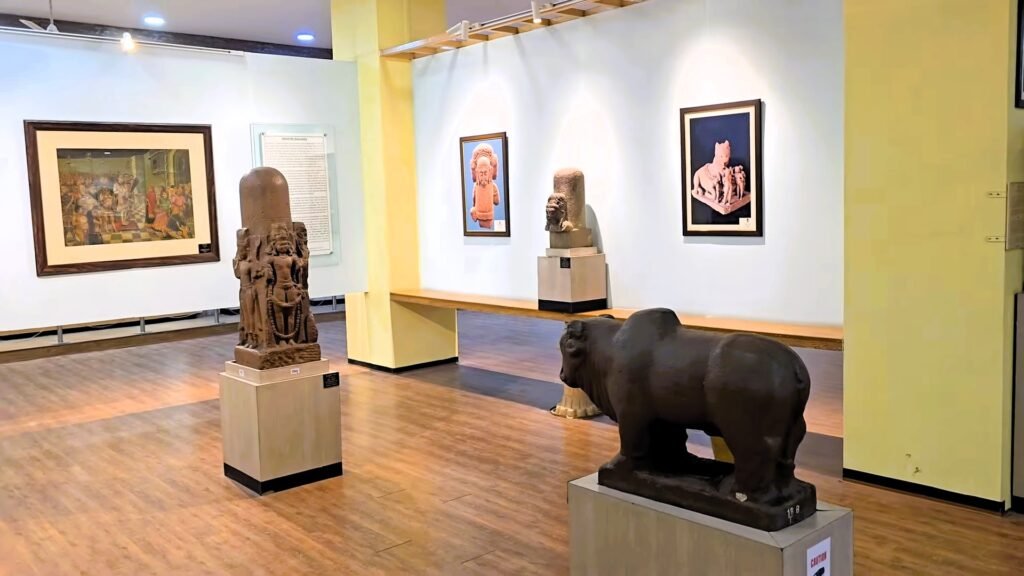
The museum isn’t huge, so you won’t need more than 30-45 minutes here. But the exhibits are well laid out. Some things that stood out to me:
- Ancient stone sculptures – Several idols and carvings recovered from old temple sites around Ujjain
- Coins from different dynasties – A small but interesting section showing how currency changed over centuries
- Terracotta items and pottery – Everyday items from centuries ago, which honestly made history feel more real than any textbook
- Inscriptions and stone tablets – Old scripts that even the caretaker had trouble fully explaining, but still fascinating to look at
It’s not flashy or modern like a city museum, but that’s kind of the charm. It feels raw and authentic.
Timings and Entry Details
Detail | Information |
Opening Days | Usually open all days except Mondays (best to confirm locally) |
Timings | 10:00 AM – 5:00 PM |
Entry Fee | Minimal, usually under ₹20 for Indian visitors |
Time Needed | 30-45 minutes |
Best Time to Visit | Late morning, before the afternoon heat sets in
|
Tip: Timings for small government museums like this one can change without much notice, so I’d suggest checking with your hotel or local guide the morning of your visit, just to be safe.
How I Fit It Into My Ujjain City Tour
Since Triveni Museum is right near Ram Ghat, I combined both in the same evening. My rough plan looked like this:
- Visited Ram Ghat in the late afternoon
- Walked over to Triveni Museum before it closed
- Headed back to Ram Ghat for the evening aarti
This worked out really well and didn’t feel rushed. If you’re already doing a Ujjain city tour, adding this museum barely adds any extra travel time since it’s so centrally located.
Is It Worth Visiting?
Honestly, if you’re short on time and only have one day for Ujjain sightseeing, I’d prioritise the main temples first. But if you have a relaxed itinerary or you’re someone who enjoys history and archaeology, this museum adds a nice contrast to all the temple visits. It gave me a different perspective on the city, beyond just its religious significance.
A Few Things I’d Tell a First-Time Visitor
- Don’t expect a big, modern museum experience; it’s small and simple
- Photography rules can be strict, so check with the staff before clicking pictures
- There isn’t much English signage, so a local guide helps if you want proper context
- Combine it with Ram Ghat since they’re within walking distance
- Carry water, especially if you’re visiting in summer
Should You Add This to a Tour Package?
Most standard Ujjain Tour Packages don’t automatically include Triveni Museum since it’s a lesser-known attraction. If you specifically want to visit, it’s worth mentioning it to your travel operator while booking so they can adjust the sightseeing itinerary. If you’re planning a longer journey beyond Ujjain, you can also look for Madhya Pradesh Tour Packages that combine the city’s spiritual landmarks with other popular destinations across the state. I found it helpful to check directly with tour operators, as many were happy to customise the itinerary once I requested the museum as part of my trip.
Conclusion
I went into Triveni Museum with zero expectations and came out genuinely glad I made the stop. It’s not going to be the highlight of your Ujjain trip, but it adds a quiet, reflective break between all the temple visits and gives you a small glimpse into the city’s much older history.
If you’re planning your itinerary and want to fit in spots like this alongside the major temples, it’s worth checking out a customised Ujjain Tour Package that can adjust based on what you actually want to see.
Frequently Asked Questions
Is Triveni Museum worth visiting during an Ujjain yatra?
If you enjoy history, yes. It’s small but genuinely interesting, and won’t take much time out of your temple-focused itinerary.
How far is it from Mahakaleshwar Temple?
It’s a short drive away, close to Ram Ghat, so it fits easily into the same day’s plan.
Is there an entry fee?
Yes, but it’s minimal, usually under ₹20.
Can I visit it along with other places to visit in Ujjain?
Definitely. I combined it with Ram Ghat, and it worked out well without feeling rushed.
Do tour packages include this museum?
Not always by default, but most operators will add it if you request it while planning your itinerary.
Get Call back From travel expert
Related Posts
Most Popular Ujjain Tour Package
Ujjain Itinerary for 2 Days
- 1 Night 2 Days
Form
INR 4200 Per Person INR 6972
Ujjain Itinerary for 2 Nights 3 Days
- 2 Night 3 Days
Form
INR 6747 Per Person INR 9747
Ujjain Itinerary for 3 Nights 4 Days
- 3 Night 4 Days
Form