
Triveni Ghat Ujjain
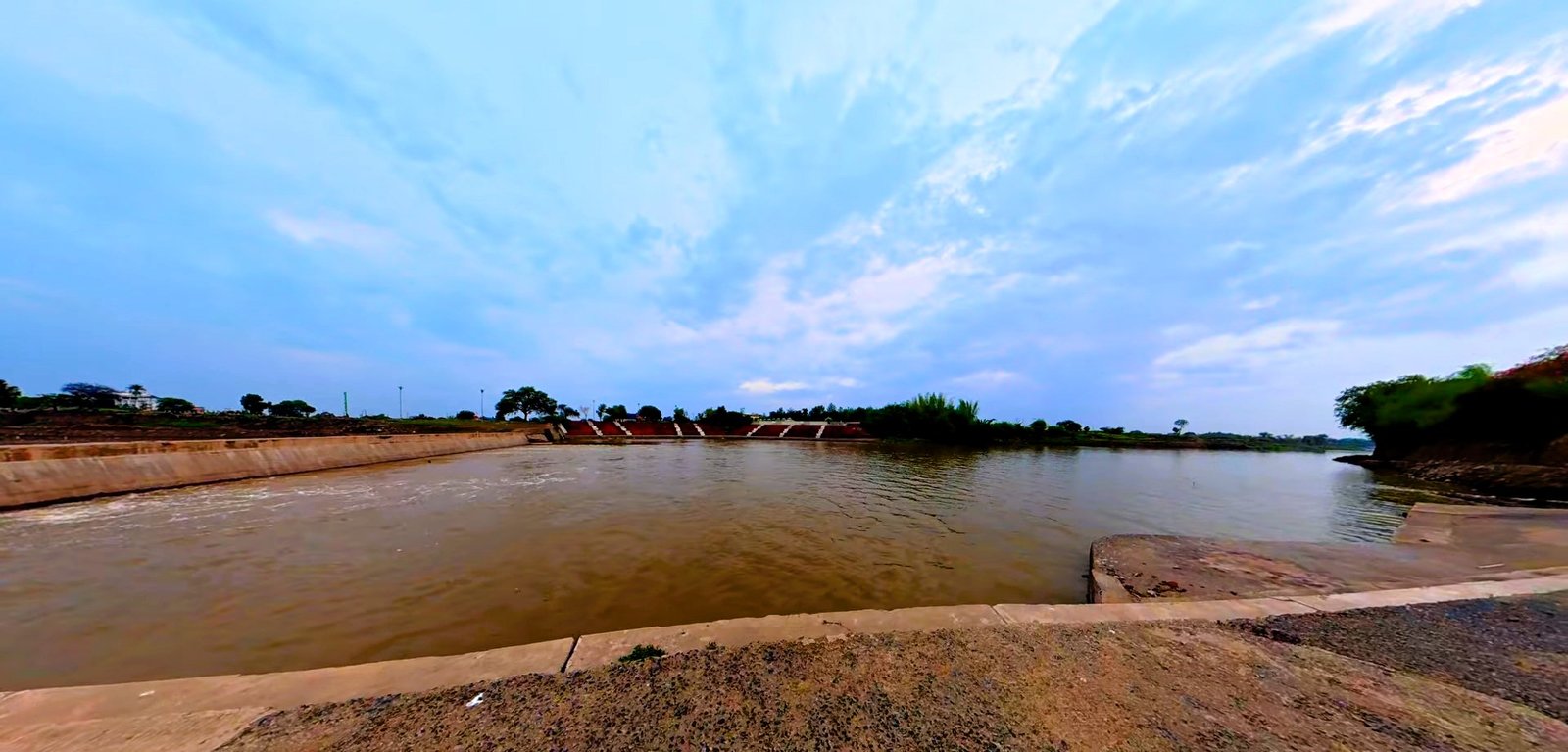
Table of Contents
Triveni Ghat Ujjain: The Sacred Confluence You Must Visit
There’s an old belief in Ujjain that goes something like this: when the Saraswati River disappeared from the earth’s surface, it didn’t vanish completely. It just went underground, choosing a handful of sacred spots to quietly resurface — invisible, but never truly gone. Triveni Ghat Ujjain is one of those spots. Stand here long enough, and you’ll understand why locals talk about “feeling” the third river instead of seeing it.
Most travel guides give this ghat a passing mention before rushing you off to Mahakaleshwar Temple. That’s a shame, because this is where Ujjain gets genuinely strange and wonderful — a place where geography, mythology, and Vedic astrology all collide on the same twenty steps.
The Legend Behind the Name
“Triveni” means three braided rivers. Here’s who’s supposed to be in this braid:
- Shipra River — the visible, flowing lifeline of Ujjain
- Khan River — a smaller river that physically joins the Shipra here
- Saraswati River — the one nobody can point to, believed to flow beneath the ground
Did you know? The Khan River’s water has thinned considerably over the decades due to upstream irrigation use. So the dramatic “three rivers meeting” picture in your head is more modest in person — yet it hasn’t dented the ghat’s spiritual pull one bit.
That last part says a lot, honestly. People don’t come here with expectations of postcard-perfect water. They come because their parents came, and their parents’ parents before them. Belief has outlived a hundred water quality reports, and it’ll probably outlive a hundred more.
Why Ujjain Treats Its Rivers Like Family
You can’t fully get this ghat without understanding the city around it. Ujjain is one of the Sapta Puri — seven cities believed capable of granting moksha — and home to the Mahakaleshwar Jyotirlinga, one of Shiva’s twelve most sacred shrines in India.
A few things that genuinely made me pause the first time I learned them:
- Ancient Indian astronomers used Ujjain as their reference point for tracking time, since the Tropic of Cancer runs close by — this city was basically India’s version of Greenwich, centuries before Greenwich existed.
- Mythology traces the Shipra’s origin to Lord Vishnu’s Varaha avatar, not some ordinary spring.
- Legendary King Vikramaditya, whose Vikram Samvat calendar is still used today, ruled from here when the city was called Avantika.
Once you know all that, a ghat built around an invisible river stops sounding unusual. It starts sounding exactly like something this city would do.
The Cult Following This Ghat Has Earned
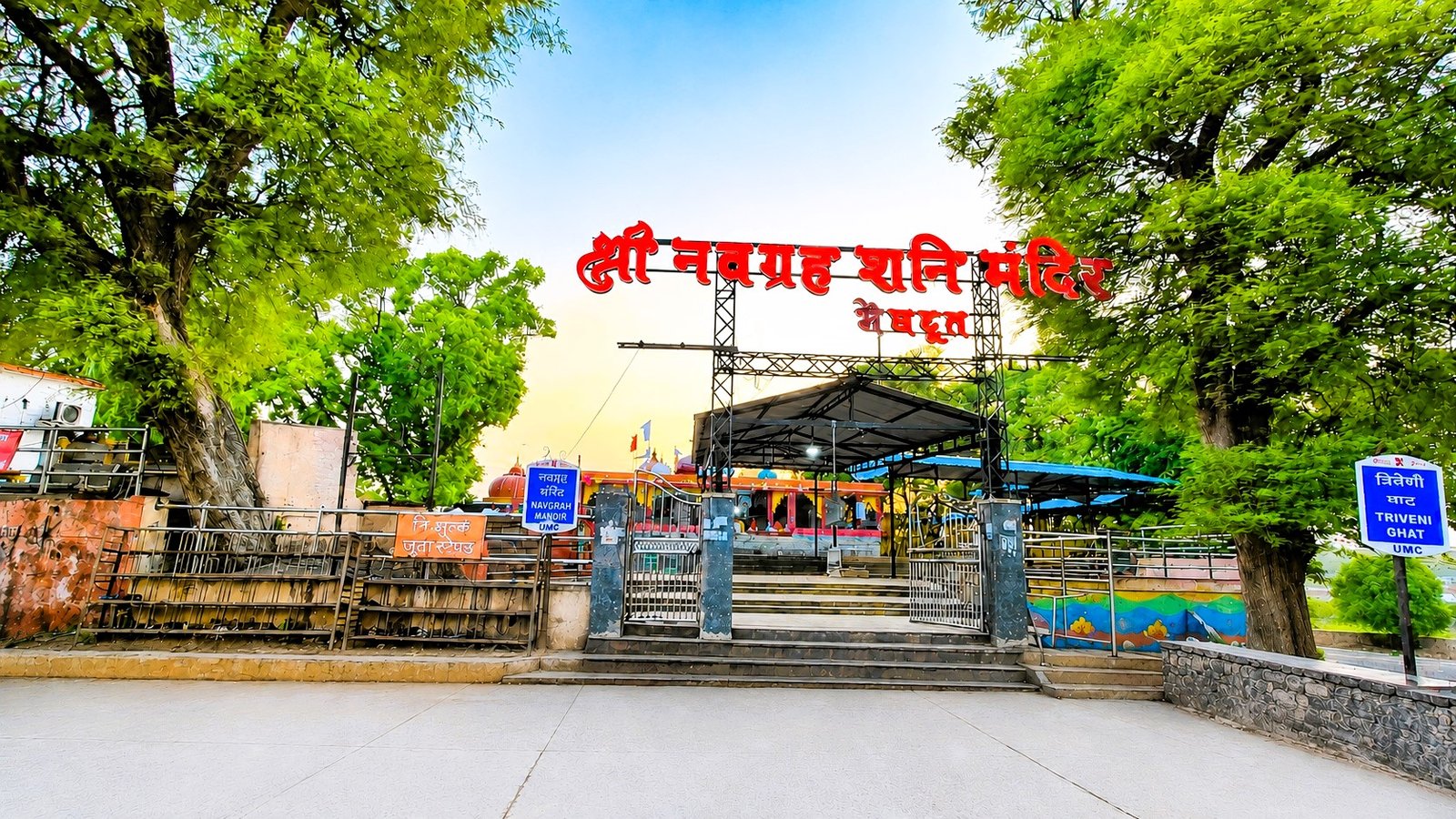
If Ujjain had a garage for fixing bad luck, this temple would be it. Sitting right at this ghat, the Navagraha Mandir is dedicated to all nine celestial bodies of Vedic astrology — including Rahu and Ketu, two shadow points that aren’t even visible planets.
Planet | Deity | People Usually Show Up Because Of |
Sun | Surya | Stalled career, low confidence |
Moon | Chandra | Restlessness, mood swings |
Mars | Mangal | Anger, low energy |
Mercury | Budh | Communication troubles |
Jupiter | Guru | Feeling stuck, no growth |
Venus | Shukra | Relationship or money worries |
Saturn | Shani | The “everything’s going wrong” phase |
Rahu | North Node | Obsessions, sudden chaos |
Ketu | South Node | Feeling disconnected, drawn inward |
Did you know? Right beside the main temple sits a dedicated Shani Mandir, and Saturdays here get noticeably busier. Devotees show up with black sesame seeds and til oil, quietly negotiating with Saturn over whatever hardship he’s currently handing out.
Watching this unfold is strangely humanising. Career stress and heartbreak, wrapped in centuries-old ritual, are still just career stress and heartbreak — only here, people have somewhere to bring it.
Rituals That Only Make Sense at a Confluence
Because multiple rivers meet here, certain ceremonies carry extra spiritual weight:
- Pind Daan — rituals performed for ancestors who’ve passed on
- Tarpan — water offerings meant to bring peace to departed souls
- Graha Shanti Puja — remedies aimed at unfriendly planets
- A quiet holy dip — for people who just want to feel a little lighter
Watch a pind daan ceremony here even once, and it tends to stay with you. The low murmur of Sanskrit verses, someone’s eyes shut mid-prayer, the river carrying on exactly as it has for centuries, asking nothing in return.
A Supporting Role in the Simhastha Kumbh Mela
Every 12 years, Ujjain hosts the Simhastha Kumbh Mela, and the scale genuinely defies description until you’ve stood in the middle of it — millions of pilgrims, naga sadhus, entire akharas moving through the city like a slow, saffron-colored tide. This ghat plays a supporting role, easing overflow crowds while Ram Ghat holds the spotlight. The next Simhastha lands in 2028. If you’ve ever wondered what a religious gathering the size of a small country looks like, that’s your year to find out.
When to Actually Show Up
Season | Months | The Real Experience |
Winter | October–February | Crisp mornings, comfortable evenings — the sweet spot |
Summer | March–June | Brutal by noon; mornings only |
Monsoon | July–September | The river swells dramatically, but steps get slippery |
Simhastha Year | Every 12 years | Chaos, devotion, and crowds like nowhere else |
Local secret: Skip the packed Ram Ghat aarti and come here at sunset instead. Same devotion, a fraction of the tourists — and you’ll actually get to talk to a priest instead of watching from the back of a crowd.
Getting There Without the Headache
Mode | Details |
By Air | Indore’s Devi Ahilyabai Holkar Airport, about 55 km away |
By Train | Ujjain Junction connects directly to major Indian cities |
By Road | NH-52 into the city; autos handle the last stretch |
Within City | Roughly 10-15 minutes from Mahakaleshwar Temple |
What to Actually Do While You’re There
- Take a symbolic dip in the Shipra — even wetting your feet counts spiritually
- Ask a priest at the Navagraha Mandir which shrine matches whatever’s bugging you lately
- Sit quietly and observe a pind daan ceremony from a respectful distance
- Catch sunset here instead of joining the Ram Ghat rush
- Talk to a local — half the good stories about this place never make it online
Nearby Spots Worth Pairing With Your Visit
Place | Distance from Here |
Mahakaleshwar Jyotirlinga | ~3 km |
Ram Ghat | ~2 km |
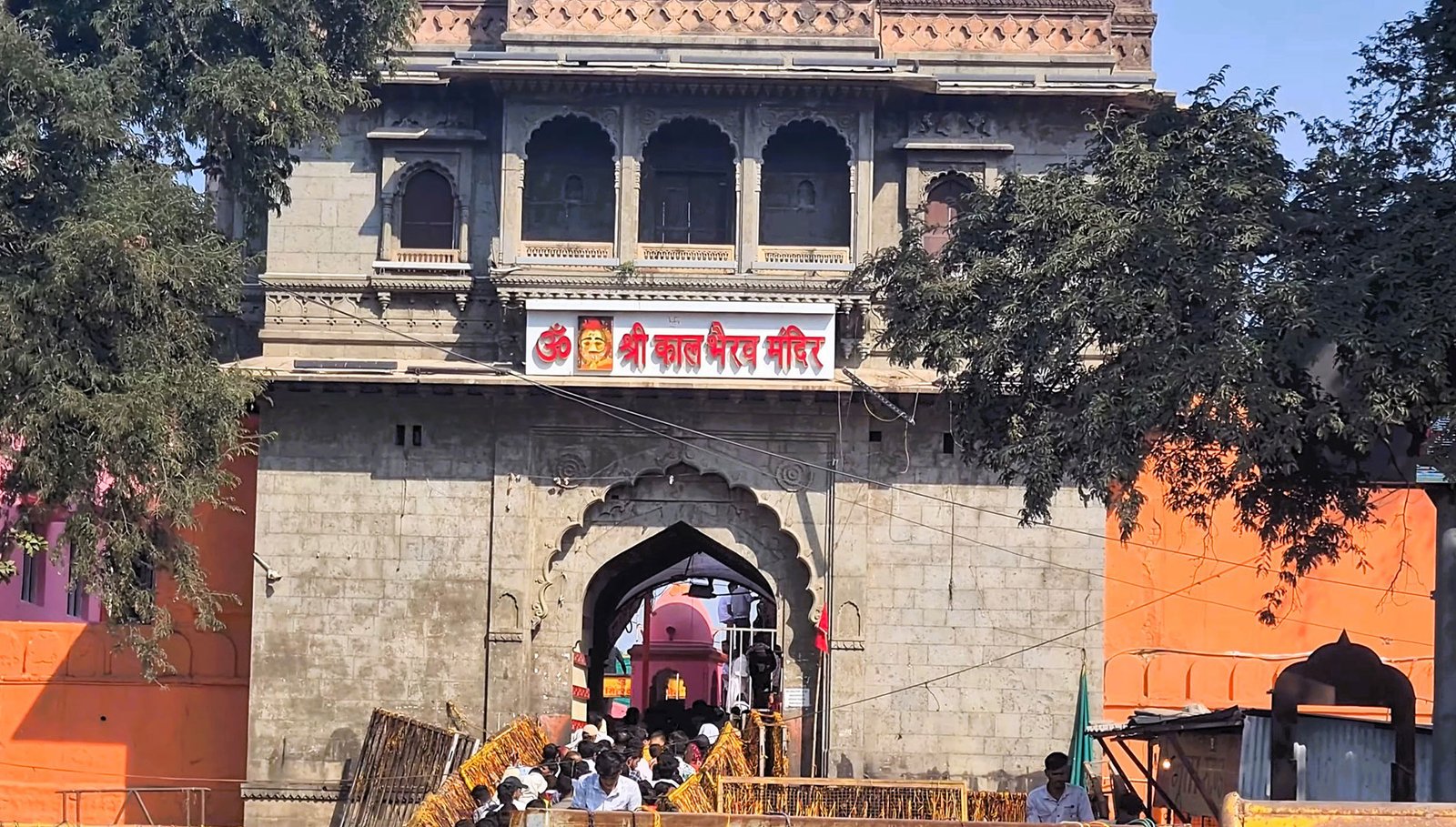
Kal Bhairav Temple | ~4 km |
Sandipani Ashram | ~5 km
|
Honest Tips Before You Go
- Dress modestly — real rituals happen here daily; this isn’t a photo backdrop
- Carry small cash for priests and offerings
- Skip plastic bottles; locals are actively trying to clean up the river
- Go early morning or sunset — the midday sun here is no joke
- Strike up a conversation with a local; the best stories rarely get written down
Conclusion
Ujjain has no shortage of famous stops, but this one doesn’t need a crowd to prove its worth. It’s the kind of place that rewards patience — sit on the steps a while, and you’ll walk away with more than a photo. You’ll walk away having quietly stood at the edge of a river nobody can see, and somehow, that’s the part that stays with you.
Your journey doesn’t have to end here. Unlock the true essence of Ujjain and Madhya Pradesh with our exclusive Ujjain Tour Packages and Madhya Pradesh Tour Packages. Experience ancient temples, magnificent heritage sites, vibrant culture, and breathtaking destinations through expertly planned itineraries, comfortable stays, and hassle-free travel services. Let every moment become an unforgettable memory.
Frequently Asked Questions
Q1. Why is it called Triveni Ghat?
It marks the meeting point of three rivers — the visible Shipra and Khan, plus the mythical, invisible Saraswati.
Q2. Is this the same as the Triveni Ghat in Rishikesh?
No. Rishikesh has its own separate ghat by the same name on the Ganga. Ujjain’s version sits on the Shipra River with its own distinct mythology.
Q3. What's special about the Navagraha Mandir here?
It’s a rare temple dedicated to all nine planets of Vedic astrology, drawing people looking for relief from a rough patch or a difficult horoscope.
Q4. Does this ghat play a role in the Simhastha Kumbh Mela?
Yes, it supports the main rituals held at Ram Ghat during the Simhastha, held every 12 years in Ujjain.
Q5. What's the best time to visit Triveni Ghat Ujjain?
Early morning or sunset, ideally between October and February, for the most comfortable and atmospheric visit.
Q6. How far is this ghat from Mahakaleshwar Temple?
Around 3 km, so pairing both in one trip is easy.
Get Call back From travel expert
Related Posts
Most Popular Ujjain Tour Package
Ujjain Itinerary for 2 Days
- 1 Night 2 Days
Form
INR 4200 Per Person INR 6972
Ujjain Itinerary for 2 Nights 3 Days
- 2 Night 3 Days
Form
INR 6747 Per Person INR 9747
Ujjain Itinerary for 3 Nights 4 Days
- 3 Night 4 Days
Form